2024 was a really hard year for us in many ways, and a sweet year in others.
Shannon, my wife of 31 years, has had challenging health issues for the past several years. This gradually escalated into daily episodes of physical paralysis, more than half a dozen Emergency Room visits, literally dozens of doctor visits, and finally a diagnosis of an autoimmune condition, dermatomyositis, in the late spring.
While she’s being treated for this condition now, her day to day energy levels and ability to move or walk around really varies. Some days, she’s mostly napping or working from bed; other days she can walk a mile, albeit slowly, and go watch the ducks at the river.
Here are some of our hard-won Tips and Tricks for living with complex health issues. Your mileage may vary, but perhaps they’ll help you. And crucially, every single one of these will help you whether or not you’re dealing with complex health issues; they’re just good life tips.
Rule #1: A Doctor’s Visit is Always Followed by a Date
We’ve been to somewhere under 50 doctor visits in the last year or so. I don’t really want to count, but I can count more than 23 separate medical professionals that we visited.
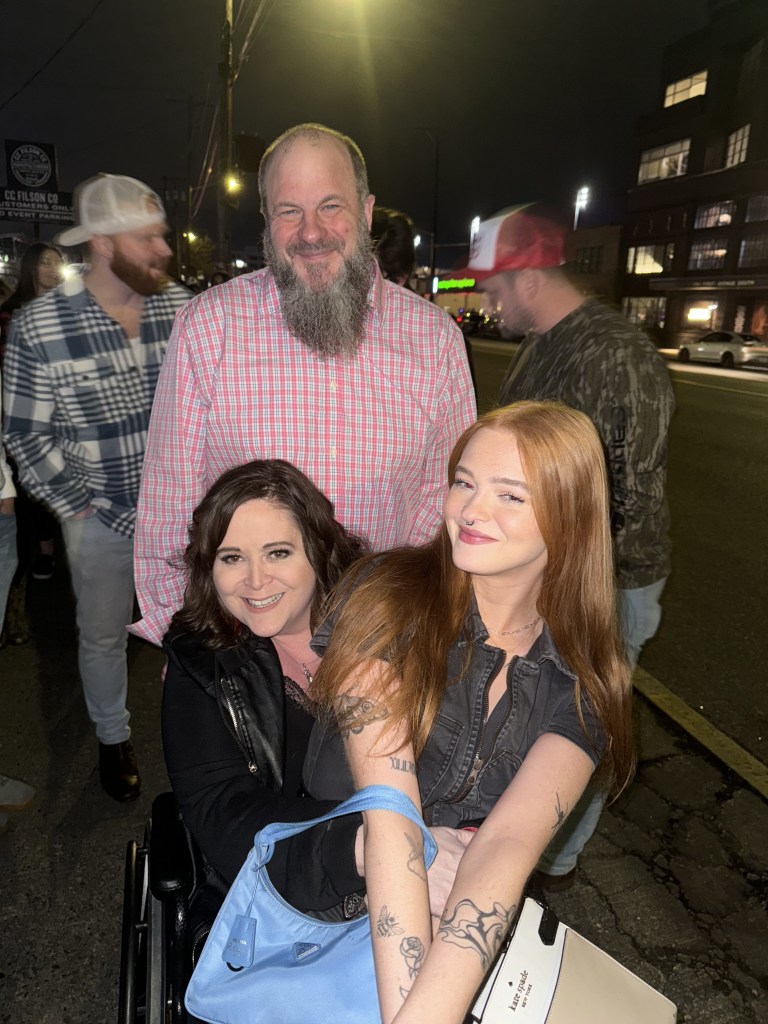
We decided early on that, rather than letting these visits drive our feelings, we’d have to treat doctor visits as an invitation to a date. Every single one – sometimes afterwards we just get drive-through coffee on the way home; sometimes we grab food (and have made a lot of visits to what has become our favorite Mexican food truck in Bellevue, WA – La Chingona Taqueria at 148th Ave SE & Main St. Sometimes we dress up a bit. Sometimes we go for a walk, often with me pushing my wife in her wheelchair so that we can just get some sunshine and fresh air. Sometimes we go see local live music, or visit the bookstore. We have to be flexible, but we always do something, so that the mood of the doctor visit doesn’t dominate the day.

Rule #2: Do What You Can, Not What You Can’t
If you know or have experienced any form of chronic illness, you’re probably aware of the Spoon Theory illustration of limited resources. The basic idea is that our resources – energy – are limited, and finite. Sometimes we can guess how much energy (how many spoons) we’ll begin a day with; often we can’t know that. So we have to carefully ration our spoons for the day ahead. Sometimes, we have enough spoons for a shower and to walk the dog and to go to work and out to dinner after. Sometimes, we have enough spoons to take a shower and we’re done for the day.
As someone who has chronic migraine and experiences at least twenty migraine attacks per month, I’m familiar with the experience of not knowing whether today will be a good day or a bad day. And while I can manage some of the things that trigger my migraine attacks, often I can’t.
In that vein, we’ve learned to take each day as it comes. Some days, we can be active – go to a show, or go for a walk, visit friends, go out to dinner, etc. Sometimes we can’t. We plan, but we plan loosely.
We’ve learned to buy trip insurance when we book hotels, for example – occasionally, we cancel a getaway for medical reasons and are able to recoup some losses.
But even when she’s not feeling well, Shannon generally wants to get out and do something. To get some feeling of sunshine (sometimes we just walk around the block, me pushing the chair), or as she says, “I can lay in bed feeling like crap, or we can go to a concert feeling like crap, but at least we went to a concert.”
Because of Rule #1, we’ve seen a lot of live music recently, including quite a few festivals (it’s so nice just to set up a comfy camp chair and sit for hours listening to music).

Our favorite event this year combined Rule #1 and Rule #2. Shannon found a little local music festival called Hoodstock on Washington’s Hood Canal. The most unique feature of this event was that they had a second stage for one day of music that was only accessible from the water. Bands set up on outside of a waterfront home, facing the salt water, and fans just had to show up somehow. There were sailboats, yachts, powerboats, kayaks, inflatable rafts, paddleboards. While we have sit-on-top kayaks and and a paddleboard, we also knew that we couldn’t cont on Shannon’s health for a full day of watching music, so I scoured Craigslist and found a nice used canoe in Portland. We drove from Seattle to Portland to buy it, then back up to Hood Canal, and we attended the water shows the next day in a canoe. Shannon set up a small lounge chair on the canoe’s floor so that she could rest (and sleep/rest as needed), while I paddled us. It was a gorgeous location and fun idea. The bands seemed to really enjoy the setting – here’s a clip of The Olson Brothers using their wireless setups to run down the dock. It was a highlight of our year.
Rule #3: Feel What You Feel
When you’re surrounded by unknowns and have medical professional after medical professional say “I have no idea what is happening to you” and “I have no idea how to treat this”, things get stressful. And scary.
We commit wholeheartedly to feeling what we feel. Sometimes we’re scared, or frustrated, or feeling swamped or overwhelmed. Sometimes hopeful.
In some of the streams of the faith traditions we grew up in, only positive thinking is allowed or encouraged; everything else was “not having enough faith”.
Let me say this clearly: That’s bullshit. It’s inhuman.
We’ve had lots of folks tell us their tips or tricks including how we should most properly feel and pray, but we remain committed to this. If we feel nervous or angry, OK. That’s real. Both of us have counselors, family and friends to talk to, and a commitment to living in reality. If we don’t give ourselves permission to feel what we feel, we’re not living in reality.
It’s also been necessary for us to know that we hear and feel thing differently – especially after a doctor visit. We have to compare notes on what was said and implied, and at times agree to disagree.
Rule #4: Set and Keep Boundaries
This may have been the hardest one for us to learn. Because of those limited resources, it’s been important for us to focus on what is best for us. That’s meant that we’re traveling differently, visiting family and friends differently, doing holidays differently. We’ve streamlined our community memberships and volunteer work. We’re disappointing people, but we’re doing what we believe is best for us.
Saying “that sounds good, but no thanks”, or even just “no” – it’s a powerful and honest response to an invitation. It’s not easy, but it’s good.
Rule #5: Find and Use Your Team and Resources
Use Your Network
It’s not easy to ask for help, but it helps. Our little church put us on a meals list for a good chunk of time, which was incredibly kind. Neighbors and friends have helped us around the house or with meals or with driving to doctor appointments or with extra flexibility.
Both of us have therapists, who help us process through all of life – and the ongoing challenges of chronic illness.
ADA parking and seating
Sometime early in the year, we worked with our primary care doctor to get the paperwork together for a temporary ADA hang tag for our vehicle. Some days, it takes Shannon a lot of energy just to get from the vehicle into a wheelchair, so the shorter distance we have to travel after that, the better.
We’ve also learned how to take advantage of ADA seating possibilites at events. Sometimes, ADA seating is fantastic; other times it’s in the back of the venue. Special shout-outs to our favorite little concert venue, Miller’s – A Gathering Place in Carnation, WA – where we’ve seen some outstanding local and regional acts – and we get cushy chairs right next to the stage. And thanks to Seattle Theatre Group Club, who goes out of their way to provide accessibility for events at the Neptune, Moore, Paramount threatres in Seattle, as well as shows at Remlinger Farms.
Washington Paid Family Medical Leave
In Oct and Nov of 2023, it was clear to us that I wasn’t able to do my work and also care for Shannon, including take her to several doctor visits a week. It was very difficult to keep up at my day job and to care for her and get us to those visits.
Fortunately for us, Washington state provides a Paid Family Medical Leave benefit, which paid me a surprising incoming for 12 weeks of care for my spouse while we took care of urgent issues and went to doctor visits and generally tried to cope with life. My job went on hold; a peer stepped in to lead my team in my absence, and I was able to walk away and not think much about work, let alone go to it and show up to meetings while I was mentally focused elsewhere.
Even though it was difficult to return to work in the midst of our struggles, I am grateful for the break and the ability to focus on the important things during that medical leave.
Use Every Bit of Your Insurance
I’m privileged to have a stable job (knock wood) that pays OK and provides good benefits, most notably health insurance that covers my family. Let’s just say that we easily hit out out-of-pocket maximum early last year.
We also had really great help accessing the Health Care Advocate that our insurance provides. While we’ve heard lots of terrible stories of these Advocates acting on behalf of the insurance company, ours has been very helpful to open up access to new doctors, to advocate for things like expensive immunotherapy treatment on one end, or a wheelchair rental on the other end of the financial spectrum.
I’d love for medical insurance to not be a massive challenge, but we live in the USA, where the healthcare system isn’t like the rest of the developed world.
Summary
These Rules are things we’ve discovered and held to over the past months. They change, we update them, and until this post they weren’t ever written down anyway. But the idea and the values behind them have helped us get through a challenging year.
I don’t think any of these are specific to dealing with illness, so I encourage you to think about what you need and want, and go after it. And if you ARE dealing with health issues, I hope these help – and that you’ll share with us what you’ve learned along the way yourself.


 pat loughery
Leave a comment